

Introduction: The Cloud Revolution in Accounting
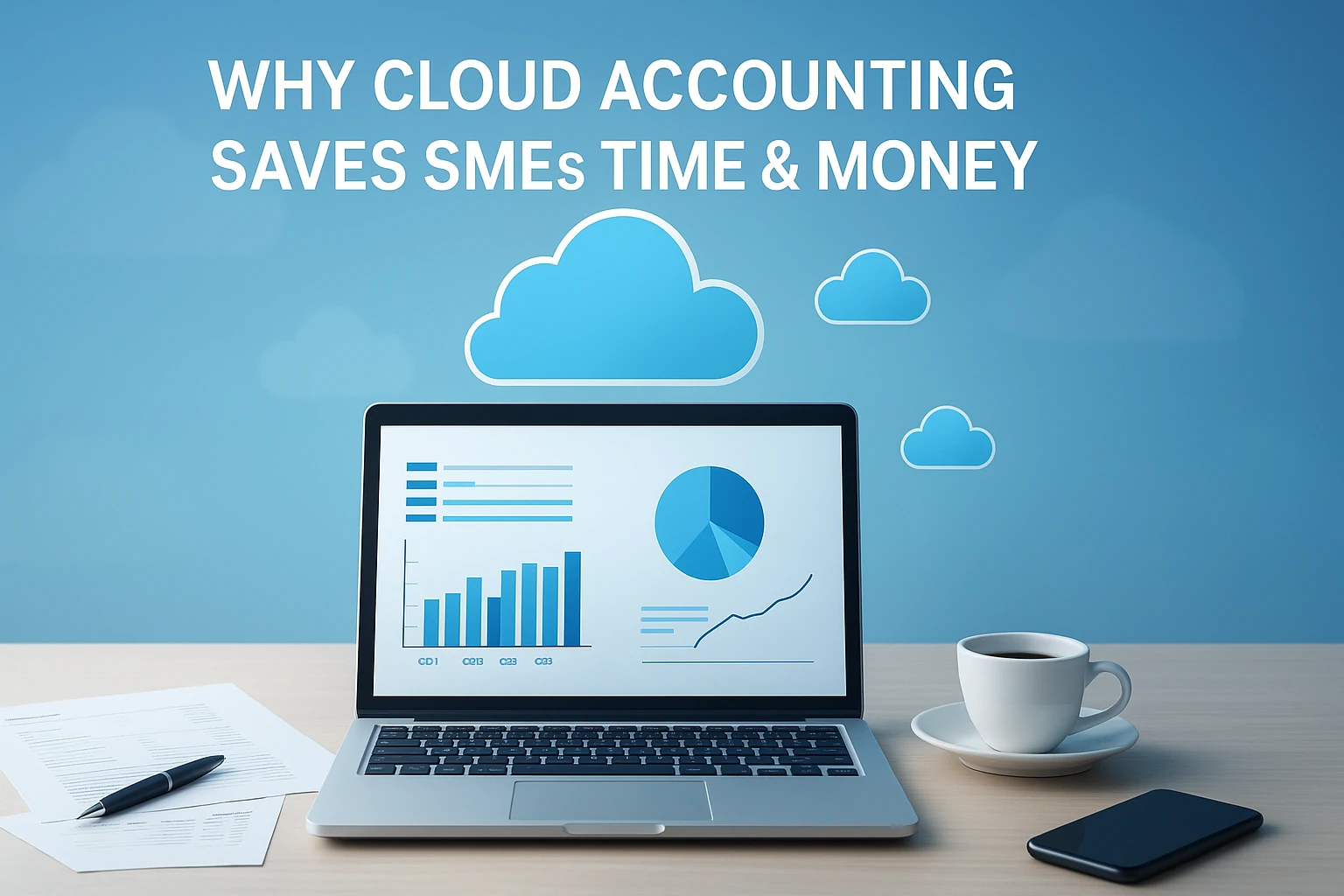
Cloud accounting for SMEs is transforming how small and medium-sized enterprises manage their finances. For SMEs, time and money are precious — and managing finances shouldn’t drain either. Yet traditional accounting software often does. That’s where cloud accounting comes in, modernizing financial management with automation, flexibility, and scalability.
No more bulky installations, endless updates, or IT overheads. Cloud-based systems run online, giving SMEs real-time visibility and control over their financial data — all while reducing costs and saving valuable hours every week.
Table of Contents
1. Cost-Effectiveness: Goodbye to Heavy Software Costs
Old-school accounting software often requires upfront payments, licenses, and maintenance — a recipe for wasted capital. By contrast, cloud accounting for SMEs saves time and money through subscription-based pricing.
With cloud accounting:
- There are no installation costs or hardware requirements.
- Updates and backups happen automatically.
- Support is included in your monthly plan.
This model replaces unpredictable IT expenses with a steady, affordable operating cost, freeing cash for core business investments.
2. Increased Efficiency and Time Savings
Automation is the secret sauce behind how cloud accounting for SMEs saves time and money. Platforms like Xero, QuickBooks Online, and Zoho Books connect directly to your bank accounts, automating:
- Data entry
- Bank reconciliation
- Invoicing
- Expense tracking
With real-time dashboards and automated workflows, SMEs can make instant, informed decisions instead of waiting weeks for manual reports.
Result: fewer errors, faster results, and reclaimed time.
3. Accessibility and Collaboration: Work from Anywhere
Cloud accounting for SMEs empowers today’s businesses to operate beyond office walls. It saves time and money by offering anywhere, anytime access through a laptop, tablet, or mobile device.
Teams and accountants can collaborate seamlessly on shared, real-time data — eliminating endless email threads and version confusion. This improved collaboration keeps everyone aligned on the same financial page and accelerates reporting cycles.
In short, cloud accounting for SMEs turns mobility into productivity.
4. Automation and Compliance Made Simple
Tax filing and regulatory compliance can overwhelm SMEs. Thankfully, cloud accounting saves SMEs time and money with built-in tax automation tools.
Features like automated VAT or sales tax calculations, audit trails, and pre-filled reports reduce human error and ensure compliance with local laws (whether UK, UAE, or the US).
Less stress, fewer fines, and smoother audits — that’s the power of automation.
5. Scalability and Flexibility for Growing SMEs
Growth shouldn’t mean system overload. Cloud accounting saves SMEs time and moneybecause it grows with the business. Adding users or modules is quick and cost-efficient.
Unlike legacy software, there’s no need to buy new servers or migrate data when you scale. The system evolves alongside your business — simple, smooth, and future-proof.
6. Enhanced Security and Data Protection
Data loss is expensive. That’s why cloud accounting saves SMEs time and money through enterprise-grade security.
Providers like Xero and Zoho Books use encryption, multi-factor authentication, and automatic backups to safeguard your data. Compliance with standards like GDPR ensures financial records stay private and protected.
If your laptop crashes or gets stolen, your books are still safe — and that’s priceless peace of mind.
7. Summary Table: How Cloud Accounting Saves SMEs Time & Money
| Benefit | How It Saves SMEs Time & Money |
| Automation | Reduces manual data entry and errors |
| Cost Savings | Eliminates software maintenance and IT costs |
| Real-Time Access | Enables instant decision-making |
| Remote Collaboration | Speeds up teamwork and approvals |
| Tax Automation | Simplifies compliance and prevents penalties |
| Scalability | Expands easily without migration costs |
| Security | Prevents data loss and breach expenses |
8. Conclusion: The Smartest Move for Modern SMEs
Cloud accounting for SMEs is transforming the business world, where speed and precision drive success. It streamlines financial processes, improves collaboration, and cuts costs — helping businesses save valuable time and money.
It’s not just software — it’s a strategic advantage. With cloud-based systems, small and medium-sized enterprises can spend less time crunching numbers and more time growing revenue.
If you haven’t made the switch yet, now’s the time. Platforms like QuickBooks Online, Zoho Books, and Xero provide everything SMEs need to take control of their finances and future-proof their business.
The future of cloud accounting for SMEs isn’t just digital — it’s in the cloud.
❓ FAQs
Q1. What is cloud accounting?
Cloud accounting for SMEs is an online bookkeeping solution that securely stores financial data on remote servers, enabling users to access, update, and collaborate from anywhere.
Q2. How exactly does cloud accounting save SMEs money?
It eliminates upfront software purchases, maintenance costs, and IT overheads while offering a predictable monthly fee model.
Q3. Is cloud accounting secure for sensitive business data?
Yes. Leading providers use bank-level encryption, multi-factor authentication, and automatic backups to ensure data safety.
Q4. Can multiple people use cloud accounting software at once?
Absolutely. Multi-user access allows team members, accountants, and advisors to collaborate in real-time without data conflicts.
Q5. What are the best cloud accounting software options for SMEs?
Popular options include Zoho Books, Xero, and QuickBooks Online — each offering automation, compliance tools, and scalability for growing businesses.
References and Further Reading
- ConsiliumCA — The Benefits of Cloud Accounting for UK Small Businesses (2024)
- TaxTMI — The Benefits of Cloud Accounting for SMEs (2024)
- Hydr — 5 Ways Cloud-Based Software Can Benefit SME Accounting (2023)
- Two Peas — How Cloud Accounting Saves Time and Reduces Errors (2025)
- Meru Accounting — Merits of Cloud Accounting for SMEs (2025)
- Zoho Books Academy — Financial Management Guide (2024)
- Workday Blog — Why Small Businesses Should Switch to Cloud Accounting (2024)
- Xero Small Business Guide — Cloud Accounting Basics (2024)
- Zoho Vs Odoo
[…] Cloud Accounting for SMEs Saves Time & Money […]